Inspiration - Flora and Fauna
This page brings together the inspirations behind my ceramic work, drawn from my photographs of the flora and fauna of the salt marsh and beach along the Fylde Coast.
From the shifting plant life of the marsh to the birds, insects, and occasional lizards that inhabit these intertidal spaces, I am continually inspired by the richness and complexity of this environment.
These observations of natural forms, movement, and pattern inform the textures, shapes, and surfaces in my ceramics.


Sea Wash Ball
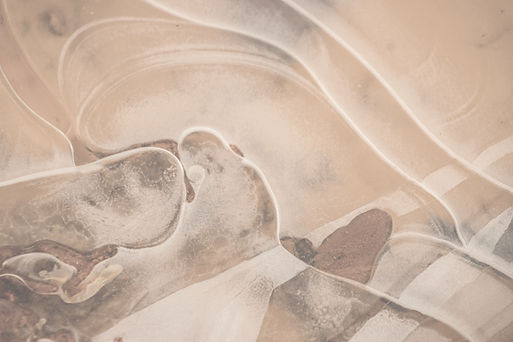
This sea wash ball — the egg case of the common whelk Common Whelk — was found along the edge of the estuary, left behind on the strand line by the tide.
Its pale, off-white form is made up of many flattened capsules clustered together, giving it a layered, organic structure that sits quietly among the debris of the shore. Often referred to in different ways such as “fisherman’s soap” or “egg cloud,” it is a natural byproduct of marine life just beyond the shoreline.
Washed ashore throughout the year, it appears briefly before drying and breaking down, another of the many temporary forms shaped and moved by the tide.
The Strand Line
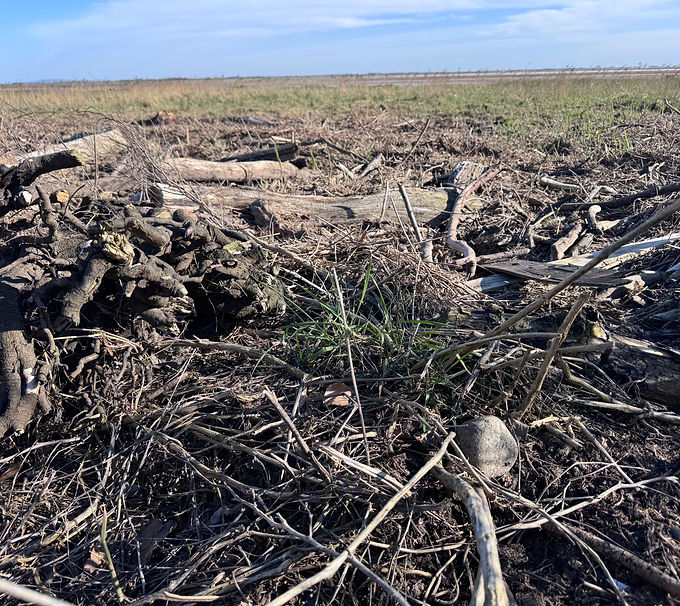
A natural strandline stretches along the beach, forming a narrow, uneven ribbon of seaweed, shells, and driftwood that marks the tide’s highest reach. This shifting line of washed-up treasures offers a snapshot of life from the sea, gathered and left behind as the water retreats.

Creeping Saltbush
Creeping Saltbush sits close to the shifting edge of the salt marsh, where land is repeatedly written and erased by the tide. It is drawn into those cycles of exposure and return, growing in ground that is never fully stable.
Its ability to hold salt and change colour to a muted grey-green speaks to a landscape shaped by repetition rather than permanence. As the tide moves in and out, it marks time not in fixed intervals, but in cycles of covering and revealing.
Its seeds travel with water, carrying the plant quietly through these changing boundaries. In that movement, it becomes part of the marsh’s ongoing record — a living trace of how time and tide continually reshape place.

Common Gorse
Common Gorse grows on the outer edges of the salt marsh, where ground and conditions are less stable and more exposed to wind and salt.
It remains green throughout the year, holding its structure through changing seasons, and produces vivid yellow flowers that stand out sharply against the muted tones of the coastal landscape. Its presence is often strongest in the harsher, more marginal ground where few other plants persist.
Deep-rooted and resilient, it is well adapted to exposed conditions and has long been associated with endurance in coastal and upland landscapes. In the context of the marsh, it sits at the boundary between land and tide, marking the edges where change is constant but growth continues.

Black-tailed Godwits
Black-tailed godwits are elegant wading birds often seen on the saltmarshes of the Fylde Coast. They have long legs and straight bills, with soft brown-grey plumage, a striking black-and-white wing pattern in flight, and a bold black tail band. They feed by probing the mud for worms and insects, often gathering in flocks on tidal flats in winter.

Crossing the Tidal Air
Four black-tailed godwits rise in flight over the saltmarsh, their long wings cutting clean shapes against the sky. Their brown-grey bodies are briefly lifted from the mudflats below, revealing striking black-and-white wing patterns and bold black tail bands as they move together in coordinated motion above the tidal landscape.

Hedgehog
Hedgehogs are now thriving in the areas bordering the saltmarsh, taking advantage of the mix of scrub, grass, and shelter. They occasionally wander along the marsh edges, foraging for insects and other small prey, and searching out safe nesting spots among the vegetation.

Dandelion Clock
A dandelion clock is the delicate seed head of a dandelion, its fine filaments forming a perfect sphere that disperses with the slightest breath. Long associated with counting and marking time, each seed carried away becomes a quiet measure of passing moments
Saltmarsh Grasses
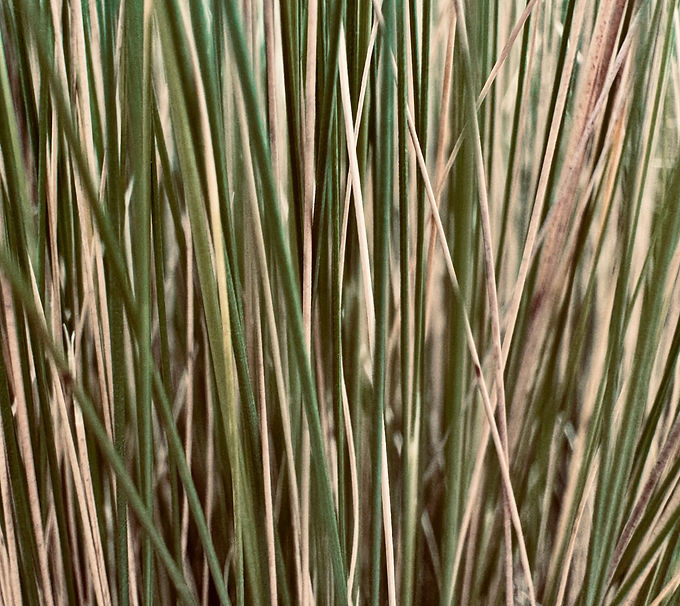
Saltmarsh grasses are low-growing, resilient plants that carpet the marsh in soft greens, often tinged with red or gold as the seasons change. Adapted to regular flooding by seawater, they tolerate high salt levels and shifting sediments, anchoring the mud with dense root systems. These grasses help shape the marsh itself, slowing the tide and creating a rich habitat for insects, birds, and other wildlife.

The Moment of Return
A swan returns to Swan Creek on the Mahan Drahan estuary, gliding in with quiet authority. Majestic and assured, she quickly asserts control of her nesting site, driving off two geese that stray too close. From her vantage point above the side channel and main creek, she reclaims her place in the shifting rhythms of the marsh.
Shoreline Standoff
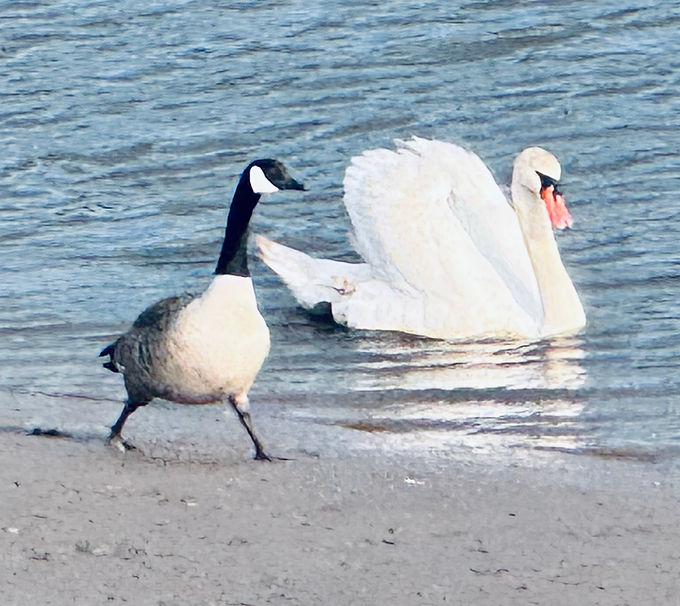
A determined Canada Goose stalks the shoreline in an attempt to cross to the other side. The relentless Mute Swan refuses to grant access. The river becomes a boundary, tense and silent, a fleeting moment of wild authority and challenge.

The Great Egret
In the quiet light of early evening, a solitary Great Egret stands motionless in the shallows, its white feathers glowing against the dark water. The stillness of the river and the curve of its neck give the scene a calm, almost timeless grace.
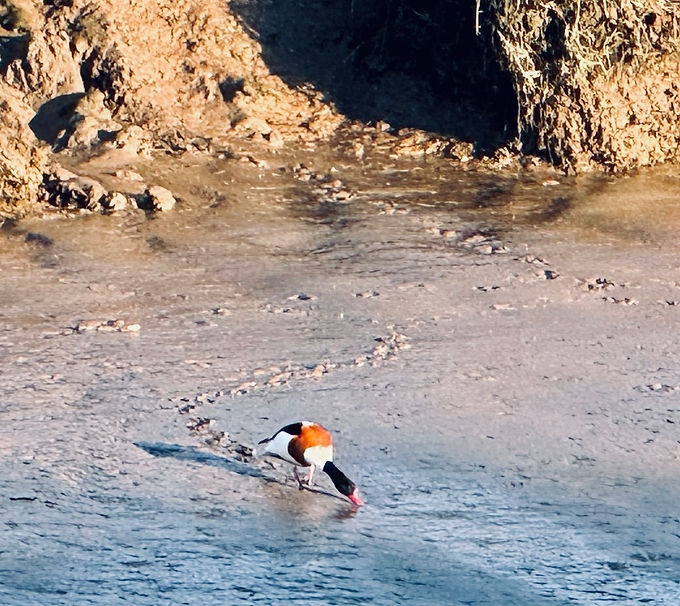
Spring Shelduck
The Common Shelduck is one of the most recognisable birds along the Fylde coast in spring, with its bold black-and-white plumage, chestnut breast band and bright red bill.
At this time of year they’re often seen in pairs around estuaries, marshes and tidal pools, feeding along the edges of the water as the tide moves out. Their upright posture and strong markings make them easy to pick out against the soft colours of the coast.
One of the quieter details of watching shelducks is finding their footprints pressed into the mud — a line of small tracks leading from the marsh down toward the river. As the tide rises and falls, those marks briefly record the bird’s journey across the estuary, measuring out movement and time before the water washes them away again.

Fields of Gold
The Creeping Buttercup seems to arrive all at once. One week the verges and marsh edges are green, and the next they’re scattered with bright yellow flowers that catch the light like drops of gold.
They spread quickly through spring, threading across damp grass and open ground, turning overlooked corners into something vivid. Seen in evening light, whole patches can glow against the darker greens around them.
There’s something simple and familiar about buttercups — small flowers that return every year without ceremony, quietly marking the shift into late spring.

At the Edge of the Marsh
Along the edges of the marshes, Stinging Nettle and Dock grow side by side in thick green bands, following footpaths, fences and tidal ground.
Nettles rise quickly in spring, tall and dense, while broad dock leaves spread low beneath them. They’re plants most people pass without much notice, but together they give the marsh edges their texture and shape at this time of year.
There’s a familiarity to them — wild, ordinary, resilient plants that return each season and settle into the same places, marking the boundaries between path, grass and water.

Herb Robert
On the salt marsh edges, Herb Robert settles into cracks and margins — places briefly exposed before the tide returns. It appears where land is only temporarily held, then released again to water and wind. In those in-between spaces it becomes part of a quiet cycle of appearance and disappearance, where time is measured less in hours than in mud, light, and return.

Sea Purslane
Sea Purslane is a low, spreading coastal plant found in salt marshes, mudflats, and shingle edges. It has thick, fleshy grey-green leaves that often look slightly silvery in certain light. The surface can appear almost powdery or frosted, which helps it cope with salty conditions and drying winds. It grows in dense patches close to the ground, forming soft mats along the upper edges of tidal zones.
In summer, it produces small, inconspicuous flowers rather than showy blooms, blending into the overall texture of the marsh. Its appearance is more about form and colour than detail — muted greens, greys, and silvers that shift with light and tide.
Ecologically, it plays an important role in stabilising salt marsh edges, helping bind soil and reduce erosion. It’s a quiet but constant presence in coastal landscapes, especially where fresh and salt water meet.
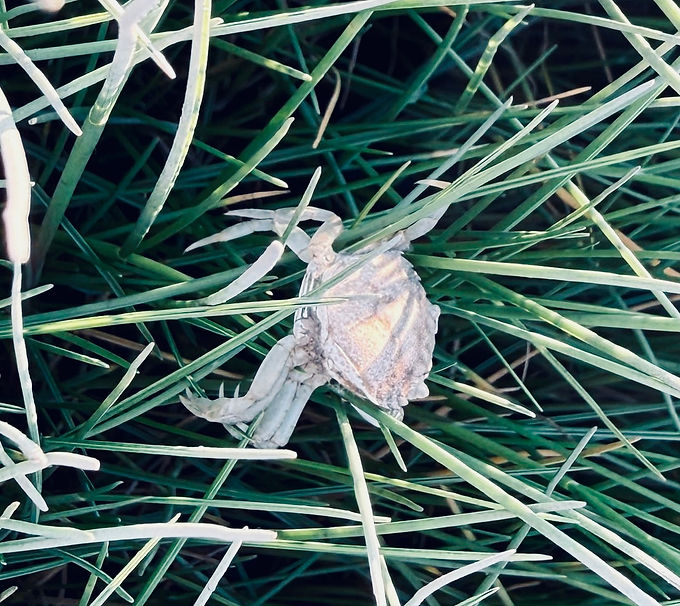
Ghost in the Grass
A small crab exoskeleton lies caught in the saltmarsh grasses, left behind after the tide has retreated. Light and fragile, it holds the exact shape of something once alive, now emptied out and dried by wind and sun. The legs are curled and fixed in place, as if paused mid-movement, held by the stems around it.
It sits half-hidden in the vegetation, not discarded so much as revealed by the water’s withdrawal — a brief archive of what passed through here. In a landscape that is constantly being rewritten by tide and weather, it becomes one of the few things that lingers long enough to be read.
In the context of the salt marsh, it feels like a trace rather than an object: a reminder that every movement across this ground leaves something behind, even if only for a short time before it too breaks down and returns to the system.

Tidal Pasture
A small group of cows lies quietly beside a winding creek on the salt marsh, taking advantage of one of their rare trips out onto the marsh when the ground is just firm enough to carry them. The silvery-green marsh grass bends in the wind beneath a sky of heavy low cloud, with dark patches of rain drifting across the landscape in sudden bursts. Some of the cows rest close to the water’s edge while others settle among the longer grass, calm and unbothered by the changing weather. The whole scene feels remote, damp, and peaceful — a fleeting moment between showers on the open coastal marsh.

Seaside Arrowgrass
Seaside arrowgrass is a low-growing salt marsh plant that forms pleasing, chunky tufts of grass-like foliage along coastal edges and mudflats. The clumps have a compact, rounded structure, but each leaf is narrow and tapering, giving the plant a distinctive arrow-like form.
The leaves rise together in dense clusters, all pointing upwards like small green arrows directed toward the sky. This repeated upward gesture creates a strong sense of rhythm and direction within the otherwise horizontal spread of the marsh landscape. In season, slender flowering spikes extend even higher, reinforcing this vertical movement.
Its clear, directional structure and repeating arrow-like shapes make it particularly suggestive for surface decoration, offering a natural template for layered pattern, directional mark-making and rhythmic, upward-flowing design.
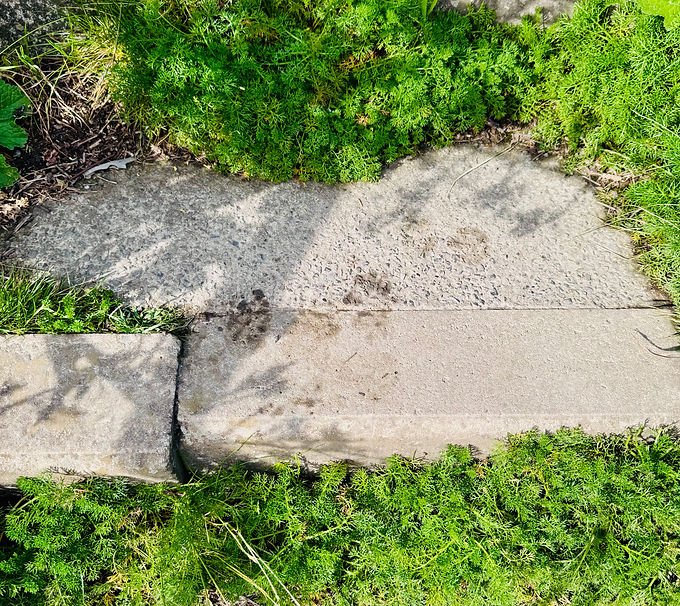
Steps to the Marsh
Scentless mayweed grows in loose, spreading clusters across the edges of the concrete steps leading down to the marsh, its fine, divided leaves softening the hard edges of the manmade structure. The plant weaves itself into the small cracks and margins, bringing a light, delicate texture to the otherwise rigid surface.
Set within this growth are clear dog paw prints pressed into the damp concrete, each one briefly framed by the surrounding vegetation. The contrast between the organic spread of the mayweed and the deliberate, transient marks of movement across the steps creates a layered scene of use and occupation.
Together, plant and print record different kinds of passage through the landscape — one slow and rooted, the other fleeting and passing.

Mirrored Wings
Two geese fly across the sky in perfect synchrony, their movements tightly coordinated as if mirrored in real time. Each adjustment of wing and body is matched by the other, creating a balanced, flowing composition in motion.
Seen together in flight, they appear far more graceful and visually striking than when either is observed alone or on the ground. The paired movement amplifies their presence, turning simple flight into a unified, rhythmic pattern across the sky.
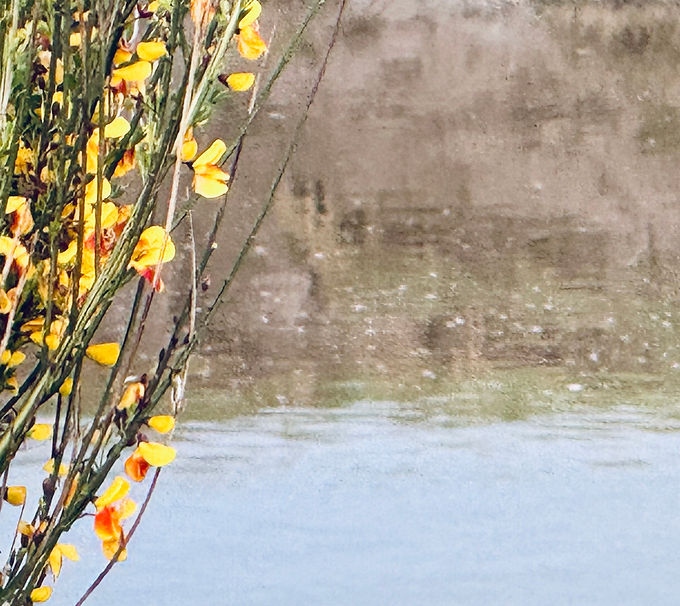
Scotch Broom
Scotch broom grows along the riverbank in dense, upright shrubs, its vivid yellow flowers forming a striking presence at the water’s edge. The colour is bold and luminous, catching the light and standing out strongly against the greens and muted tones of the marsh and river landscape.
Its flowering coincides beautifully with nearby gorse, the two plants creating a shared wash of bright yellow across the landscape. Together they form a complementary burst of colour that feels almost continuous in places, softening the boundaries between different areas of vegetation and drawing the eye along the river edge.
Alongside its visual impact, Scotch broom also plays an ecological role, helping to stabilise soil, prevent erosion and support insects and butterflies with its nectar-rich blooms.

A Daily Rhythm
In the early morning light, daisies are captured halfway through opening, their petals slowly unfurling as they turn their faces towards the rising sun. There is a quiet sense of anticipation in this moment, as the flowers respond to the start of a new day.
They reflect the cyclical rhythm of a single day, opening and closing their petals in response to light and darkness, marking time in a subtle, living way. This daily cycle echoes the wider rhythms of the landscape, reinforcing the constant return and renewal found within the marsh environment.
Associated with long, lazy summer days, daisies carry a familiar, nostalgic presence. Often dismissed as weeds in cultivated gardens, here along the banks of the salt marsh they feel entirely at home, forming a natural and welcome layer within the vegetation. Their simple brightness softens the edges of the marsh, gently mirroring the rising sun.

The Mute Swan
Mute Swan lives according to the shifting rhythms of water, weather, and season. In spring, pairs become fiercely territorial as they nest among reeds and raise cygnets through the long light of summer. Autumn brings quieter waters and the gathering of family groups, while winter reveals their resilience against cold, flood, and frost. Their slow migrations across lakes, rivers, and canals mirror the changing tempo of the landscape itself — a cycle of courtship, growth, stillness, and return that has shaped life on British waterways for centuries.

Bottlebrush
Field Horsetail, also known as Bottlebrush or Mare’s Tail, is an ancient mineral-rich plant recognised for its exceptionally high silica content and its role in ecological restoration and pollution control. Its vivid green segmented shoots rise vertically from the soil in dense colonies, creating the unmistakable appearance of a natural bottle brush. Thriving in disturbed or waterlogged ground, Field Horsetail is both resilient and restorative — a living reminder of deep botanical history and the regenerative rhythms of the landscape.

Estuary Landing
The Common Shelduck descends onto the river with wings fully extended, revealing a striking contrast of black, white, and chestnut plumage as it brakes against the air before touching the water. Powerful yet graceful, the shelduck’s landing captures a fleeting balance between flight and stillness — a moment of precision shaped by wind, current, and instinct along the shifting edge of the river.

The Canada Goose
Canada Goose is a resident of the salt marsh, moving between grazing areas, tidal edges, and quiet pools in search of suitable nesting sites and feeding grounds. Highly territorial at times, it will occasionally clash with swans and other waterbirds as boundaries overlap in the confined spaces of the marsh. Despite this, it remains an established part of the local ecosystem, its presence woven into the everyday rhythms of the landscape.

Seashore Aster
As summer gently gives way to early autumn, the Seashore Aster (Aster tripolium) brings a beautiful splash of colour to the salt marsh. Its delicate purple-blue petals and sunny yellow centres stand out against the fresh green of the marsh, creating a wonderful natural palette. Well adapted to salty coastal conditions, this native wildflower also provides valuable late-season nectar for bees and other pollinators, making it both beautiful and important to the rich life of the salt marsh.

Annual Seablite
Annual Seablite (Suaeda maritima) is a fascinating little plant of the salt marsh, perfectly adapted to life in salty, coastal conditions. As we move into early autumn, its fresh green foliage begins to take on warmer reddish and purple tones, adding another beautiful layer of colour to the marsh. Growing amongst mud, salt and shifting tides, Annual Seablite is a wonderful example of the quiet resilience of our coastal plants and an important part of the salt-marsh community.