Research - Japanese tea bowl shapes
- Victoria
- Feb 24
- 2 min read
Known as Chawan, the Japanese tea bowl exists in an extraordinary variety of forms, each shaped by season, region, history and the aesthetics of the tea ceremony. As I continue my throwing-off-the-hump sessions in the studio, I’m planning to research these forms more deeply, with the intention of selecting one or two shapes to concentrate on and attempt to replicate.
There are some very helpful visual guides available online, but the most engaging resource I’ve discovered so far is Tezumi on YouTube. The presenter brings the bowls to life, explaining not only the differences in shape and proportion, but also the cultural and historical contexts behind them. What fascinates me most is how these shapes are not merely aesthetic choices — they are deeply connected to seasonality, function, and cultural lineage. As I continue practicing throwing off the hump, I’m drawn to exploring how subtle shifts in wall angle, foot height and rim treatment can transform not just the appearance of a bowl, but its entire presence in the hand.
The challenge now will be to choose one or two forms to focus on — and to see whether repetition can bring me closer to understanding their quiet sophistication.
The forms that have particularly captured my interest so far are:
1. Tenmoku-gata
Originating in China, the Tenmoku-gata has a small foot, a conical body, and an indented, outward-flaring lip. The profile feels elegant and dignified, with a refined lift toward the rim. Its proportions create a beautiful balance between strength and delicacy.


2. Ido-gata
Korean in origin, the Ido-gata is known for its distinctive foot, often featuring a small point inside the foot ring and a subtle bump within its form. Wheel marks are frequently left visible on the surface, enhancing its sense of honesty and movement. The foot can be quite tall, giving the bowl quiet presence.
The most famous example is the Kizaemon Tea Bowl, considered by many to be the finest of all tea bowls.


3. Hatazori-gata (often linked with Komogai-nari)
Also Korean in origin, these bowls have a wide, curved foot, a generous body, and a softly curved, flaring lip that makes them particularly pleasant to drink from. The openness of the form feels welcoming and balanced.


4. Hantsutsu-gata
Japanese in origin, these half-cylindrical tea bowls are generally sturdier in appearance than their Chinese or Korean counterparts. They have a low, wide foot, a flat base, and relatively straight walls.
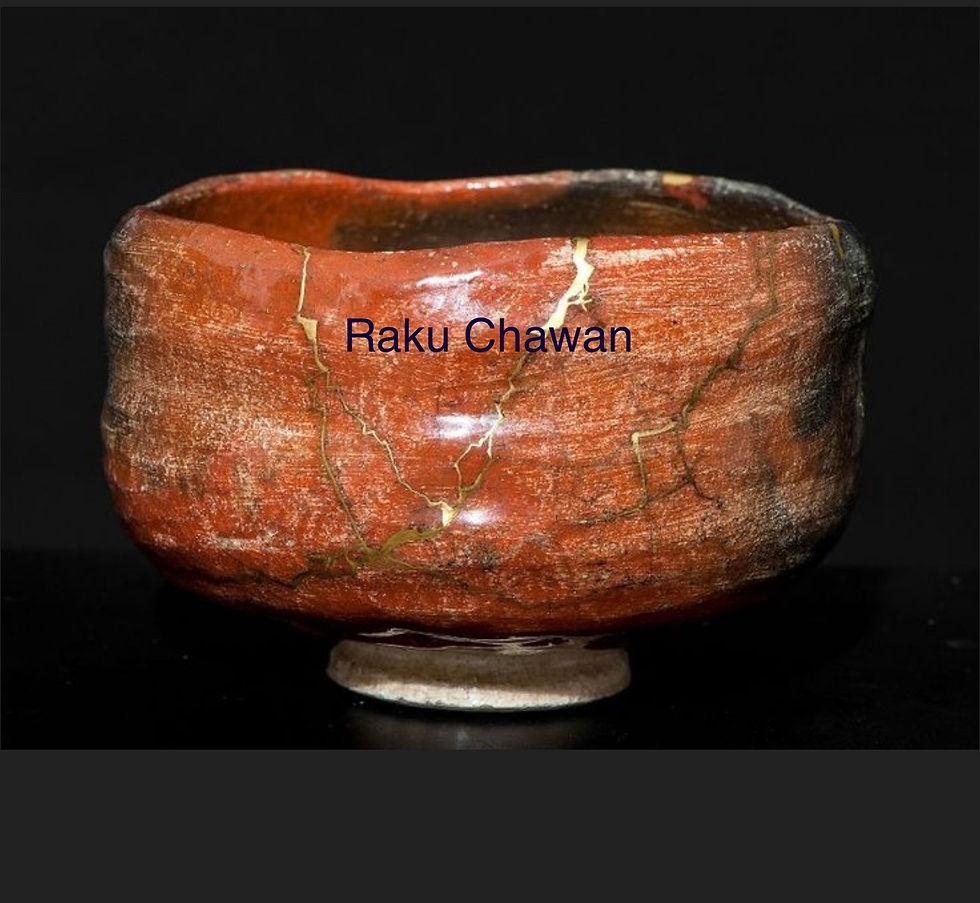
Perhaps the most well-known variation is the Raku Chawan, often made in the hantsutsu-gata form and featuring the characteristic uneven rim known as the “Five Mountains.” Variations within this shape can include slightly curved walls, a folded lip, or a more defined waist.


5. Tsutsu-gata
This form is more cylindrical and narrower than the hantsutsu-gata. Its taller, more enclosed profile makes it particularly suited to winter use, as the shape helps retain warmth in the tea.


Hira-gata
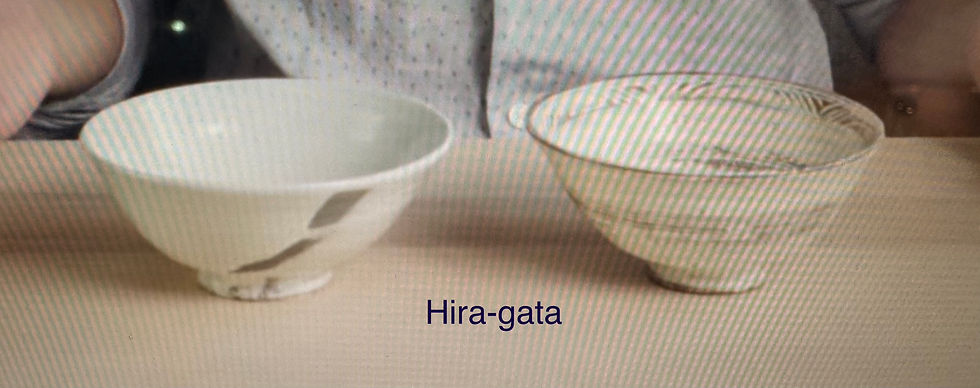
A flatter, wider form typically associated with summer use, as the tea cools more quickly in the open shape. The profile may be straight-edged or gently curved, with or without a flaring lip. Its breadth offers a generous surface for appreciating the tea’s colour and the interior glaze.


Comments