Coil building - Keuper Red
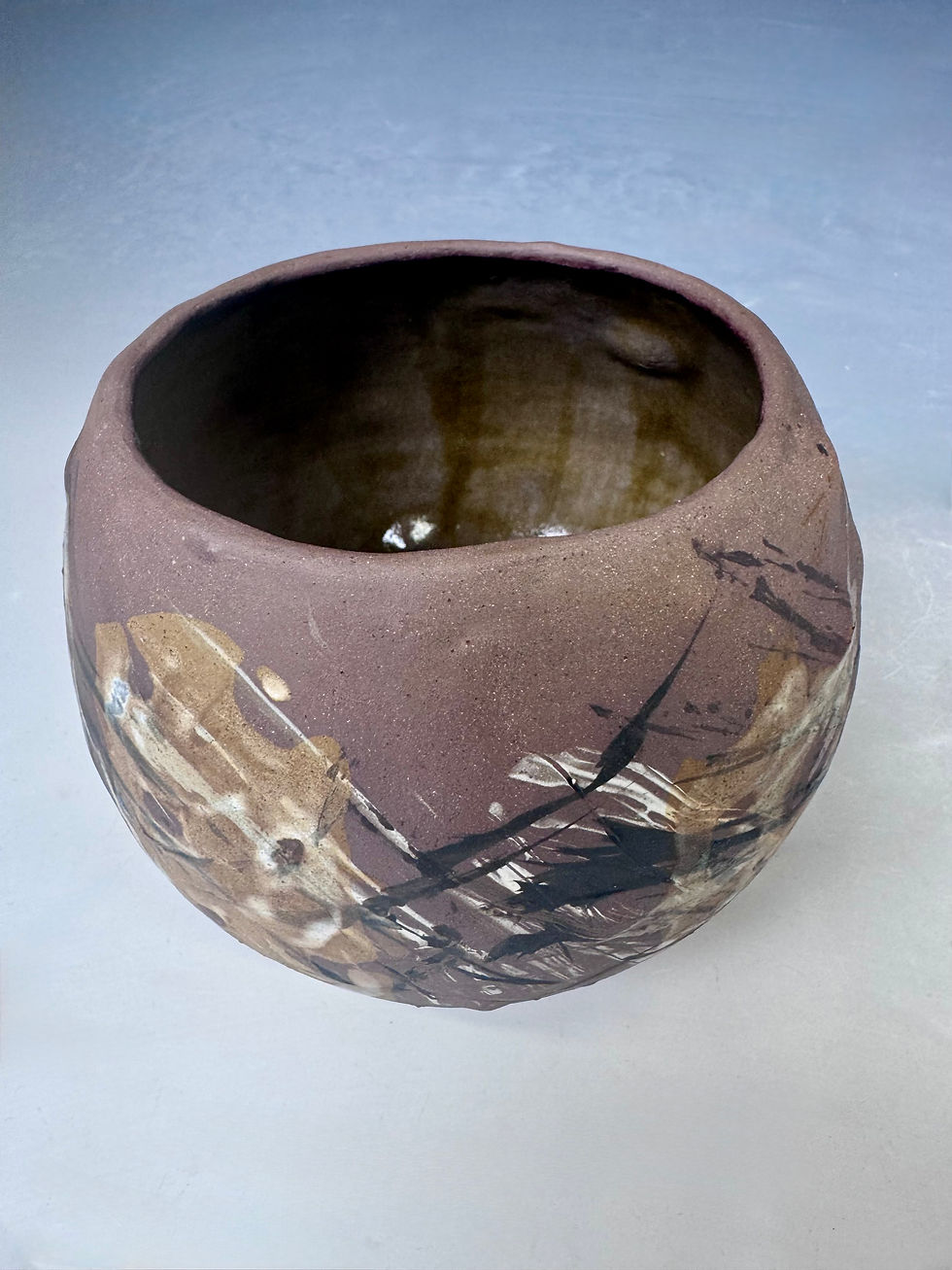
Bowl 1 (H18)
For this piece, I applied black and white slip to the exterior using sea grass to create texture and pattern. After bisque firing, black and white glaze was applied to the outside and a transparent glaze to the interior.
The initial firing produced a result that felt rather dull and lacked the richness I had hoped for. In response, I reheated the piece and reglazed the interior with Tenmoku glaze. I also added further decoration to the exterior by printing white glaze with a sponge before firing again.
Keuper Red clay has proved to be quite sensitive during firing, and this piece has developed some bloating in places. Despite this, the Tenmoku glaze on the interior is particularly successful, producing a rich and pleasing surface. On the exterior, the additional white glaze has developed an unexpected metallic white appearance, which I presume is a reaction to the high iron content of the clay body. Although this was not the intended outcome, I find the effect interesting and aesthetically rewarding.
I am particularly pleased with the quality of the mark making and the layered surface that has developed through the multiple stages of decoration. Looking ahead, I would like to experiment with a different red clay body to compare its firing characteristics. With hindsight, I would also apply less additional white glaze, as some areas feel overworked and the metallic effect is more dominant than intended.

Bowl 2 (J1)
This bowl has a more flared rim than the first piece, meaning that much more of the interior is visible. This provided a good opportunity to consider the decoration of the inside as well as the outside of the vessel.
The interior was initially coated with four layers of white slip and then sgraffitoed once dry. On the exterior, black and white slips were applied using a sponge to create pattern and texture. After bisque firing, sections of the interior were painted with black glaze and then overlaid with Tenmoku glaze. The same Tenmoku glaze was also applied around the lip and on the foot of the vessel. Red underglaze was added to areas of the interior before the whole interior was coated with transparent glaze and stoneware fired.
Like the first bowl, this piece was made from Keuper Red clay and suffered from some bloating during firing. Despite this, the interior decoration emerged crisp and clean, which was a relief given the complexity and delicacy of the process. Technically, the result is close to what I had imagined before firing.
However, now that the piece is complete, I find that I do not particularly like the overall effect. The colour palette was inspired by the Common Shelduck, drawing on its distinctive black, white, chestnut brown and red colouring. I remain attracted to this combination of colours and would like to explore it further in future work, but I do not think I achieved the right balance in this piece. The proportions of the colours feel unresolved and the vessel has become overly decorative.
One of the main issues is that the interior and exterior surfaces appear to compete with one another rather than working together harmoniously. There is too much visual information, and the eye is not given a clear place to rest. In particular, the Tenmoku glaze applied to the exterior does not seem to contribute anything meaningful to the design, while the treatment of the foot feels unnecessarily fussy.
Although this is not a piece that I particularly like, it has been valuable as a learning exercise. It has highlighted the importance of restraint, the careful balancing of decorative elements, and the need to consider how interior and exterior surfaces relate to one another as a unified whole.
Bowl 3 (J2: Goblet Form)
The third piece took the form of a goblet, a shape that I am particularly interested in because of its strong associations with ritual, ceremony, and the concept of repeated actions performed within a group. The vessel was constructed using Keuper Red clay and was enjoyable to build, allowing me to explore a form that feels conceptually significant as well as visually engaging.During the drying process, the goblet was stored upside down to reduce stress on the stem. This precaution felt particularly important as the cup section is arguably oversized in relation to the overall dimensions of the goblet, creating a potentially vulnerable structure. Despite these efforts, the piece still presented challenges later in the firing process.
The interior was decorated with white slip and black slip applied using a sponge. Following bisque firing, additional red slip was applied with a sponge to introduce further colour and contrast. The exterior was coated with copper oxide and then selectively wiped back to emphasise the carved surface beneath.
The exterior is, in my view, the most successful aspect of the piece. The combination of carving and copper oxide has produced the metallic, worn appearance that I had hoped to achieve. The surface suggests age and use, reinforcing some of the ritualistic associations that initially attracted me to the goblet form. The carvings remain visible through the oxide treatment and contribute to a sense of depth and history within the surface.
The interior is visually striking, but I do not feel it sits comfortably alongside the exterior treatment. The two surfaces appear to belong to different objects and do not establish the same sense of cohesion that I was aiming for. This is something I will need to consider more carefully in future work, particularly when combining decorative approaches that have very different visual qualities.
Unfortunately, during firing the stem bent, leaving the goblet noticeably wonky and no longer fit for purpose as a functional object. I am uncertain as to why this occurred, especially given the care taken during drying, and I intend to investigate the cause further. It may be related to the proportions of the form, the weight of the bowl relative to the stem, the characteristics of the clay body, or the firing process itself.
Despite this structural failure, the piece has been a valuable experiment. It has reinforced my interest in goblet forms and the themes they evoke, while also highlighting the importance of balancing aesthetic ambition with structural considerations. The success of the exterior surface treatment is something I would like to develop further in future work.


Comments