Making a plaster cast mould
- Victoria
- Jan 29
- 2 min read
As part of my ongoing research towards completing the Box of Secrets project, today I was helped by Rob to make a plaster cast mould. I selected an interestingly textured twig from a small collection gathered from the salt marsh near my home, gently wiping it to remove any loose material.
Using a slab roller, I rolled out a reasonably thick slab of stoneware clay. The twig was then pressed firmly into the clay, rotated and repositioned repeatedly to create as much variation in texture as possible. Once complete, the slab was placed onto a rectangular board and trimmed into a neat rectangle of the same size before being taken to the plaster room.


Four wooden planks were placed around the clay slab to create a tight seal, each one carefully scraped clean of any residual plaster before use. Bricks were positioned around the outside edges to hold the planks securely in place. A clean bucket was then filled with three pints of clean, cold water, and the appropriate amount of powdered plaster was sprinkled in under the extraction fan (guidance on quantities is provided on a chart next to the plaster).


The plaster was left to soak briefly before mixing by hand, using a gentle waving motion at the bottom of the bucket. The aim was a texture similar to double cream. Any bubbles rising to the surface were skimmed off by hand and disposed of. Once the plaster reached the right consistency, it was poured into the mould in a single spot, allowing it to flow naturally. The level was filled slightly higher than the top of the boards. The bucket was deliberately not washed out at this stage, as it provides a useful indicator of how quickly the plaster is setting.


A metal ruler was used to scrape off the excess plaster and level the surface. Once the plaster had set, the wooden planks were removed and the clay carefully peeled away, revealing the reverse mould.


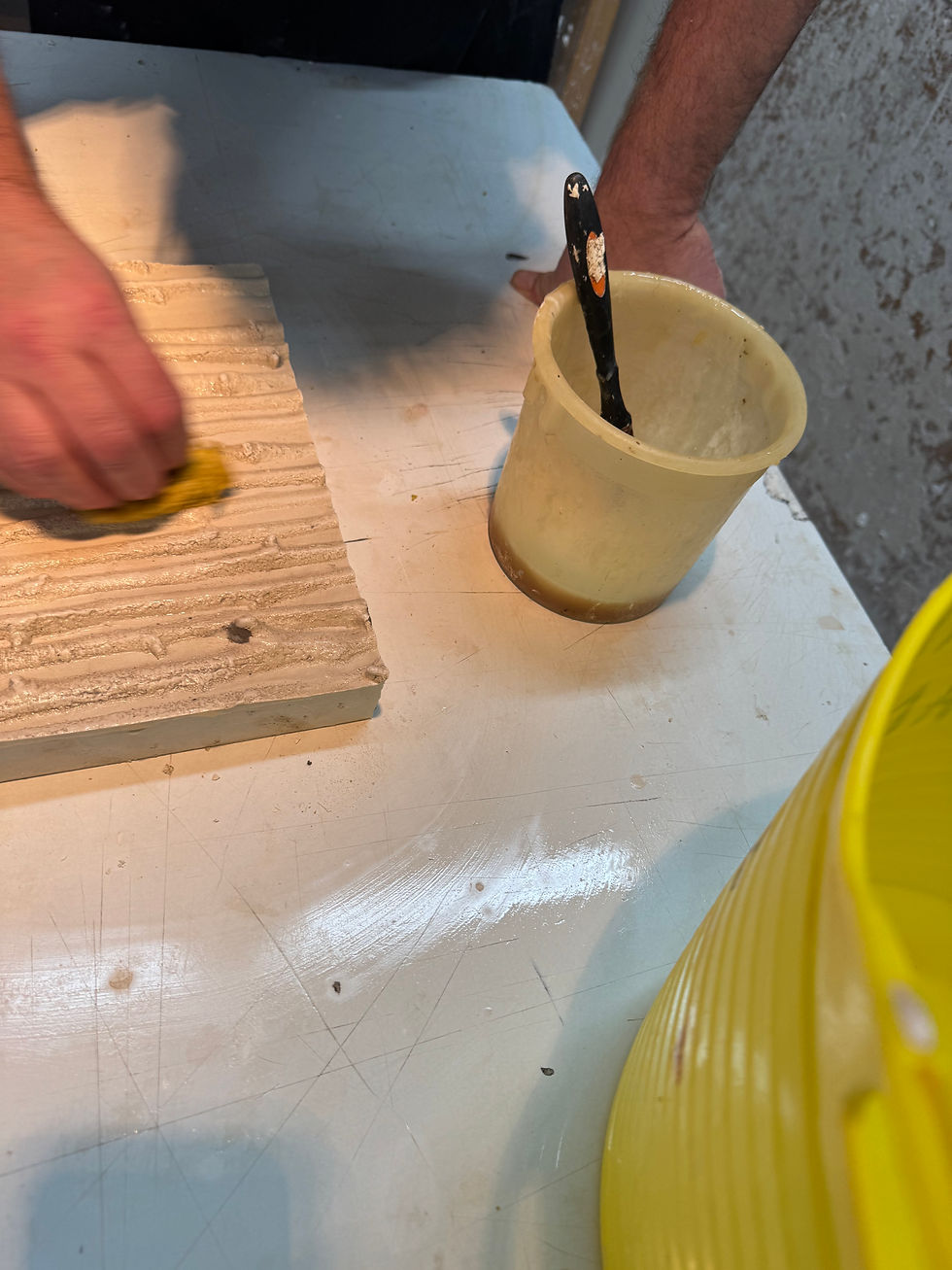
As we wanted a mould in the opposite direction, the process was repeated. The first plaster mould was thoroughly cleaned using two to three coats of soapy solution (50% soft soap, 50% water) to remove any remaining clay. The sides were also soaped to prevent the plaster sticking in case of leaks. This time, no board was needed; the original plaster mould was placed directly on the table and the plaster mixing and pouring process repeated.
Once fully dry, the edges were cleaned with a metal tool and the sides gently tapped to help the two plaster sections separate. The resulting plaster cast is absolutely brilliant — I’m delighted with how it has turned out and excited to explore how it will be used within the Box of Secrets project.


Comments